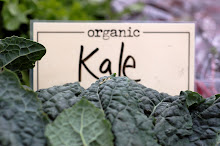
Green? I don't think so.

I'm not green. Sure, I eat seasonal local food. We barely produce trash. I take the bus and we are hard pressed to turn on the heater. But I still go to the dry cleaners. I know. I'm going to hell.

But if I were a business I could call myself green on the mere fact that I buy local when possible. Once a year I could buy lettuce from Marin Roots Farm and my greeness would be qualified. You could pull up a chair in my restaurant, read the blurb on the front of the menu: locally and organically sourced when possible. And then you could turn your brain off. I have.

It won't matter that it's November and there's asparagus on the menu or an heirloom tomato salad. Peaches for dessert? Terrific. Locally sourced will be lodged securely in your brain such that you won't give the season a second thought. It won't matter if your leftover foreign and industrial food is packaged in a styrofoam container with a handy plastic bag to carry it home in. It won't matter that you are sitting outside under a propane powered heater; the front of the menu clearly states in capital gold letters that this is a green business. Everything is cool. Make that green.

I can't tell you how many times I fool myself or how many times I'm fooled by the green spin.

My corner grocery advertises their Greeness on their website. Maybe they qualify themselves by the fact that the lettuce they sell is in 25% less plastic than the roasted chickens. The webiste lists a dozen ways to reuse a paper bag. But they bag groceries in plastic. I'm missing the green.

Perhaps I should celebrate that there's great market potential for being green. Perhaps I should be optimistic that we're moving in the right direction. Some days I am. But other days it seems like brandishing about the buzz words - green, local or organic is just another way to dumb us down and make a sale.

Thank goodness you can't fool all the people all of the time though or however that saying goes.

Sustainable Seafood Sushi Guide

I've been wanting to post the new Monterey Bay Aquarium seafood watch sustainable seafood guide for sushi for awhile. Say that five times fast! Finally here it is.

It's interesting to note that many of the items on the Best Choice list are farmed. What happened to the wild sources?

There's eye candy information on the aquarium's website about trying new flavors. Be daring, they write, explore new flavors.

I've avoided sushi since reading Bottomfeeder, How To Eat Ethically In A World Of Vanishing Seafood. But with the guide I'm going back informed. At least to give something new a try.

Smelt roe, giant clam or Canadian sea urchin anyone?

Haiku Friday


What a pretty night
sitting in stopped traffic on
the Golden Gate Bridge.

The Tortilla Ladies

At breakfast in a big market outside of Oaxaca one morning I kept hearing the women from the different kitchens, there were eight of them in a row, clap. Not the kind of clap you use for a birthday celebration. I'm talking an I-mean-business kind of a clap that riccocheted from the high cieling to the cement floor. A clap that beat out the mole machines that ran constantly 20 feet away. And after the women would clap they'd return to the stove or the sink or the cutting board and calmly continue cooking.

After this happened six or seven times and I'd craned my neck around the people near me, nearly spilled my coffee and stepped on a few toes to watch the clapping I figured it out. Or maybe one of my table mates did, but let's say I did.

The clapping was the call for a tortilla lady. Any tortilla lady that was near by. There were many. They wore aprons with rickrack trim and carried baskets of tortillas lined with flour sack towels. At the clapping woman's counter they made their transaction. A stack of fresh tortillas for the exchange of a few coins. No plastic packaging. No garbage. It was a beautiful thing.

I miss the tortilla ladies.

Don't you wish we could have tortilla ladies at our markets? Or a booth that made fresh tortillas so you could buy a stack for a few coins?

Sugar Skulls


I'm at the Bookwormers Blog this week too. Come on by. I wrote about a new cook book with very pretty pictures, a platter of figs and other recipes.

Global Exchange


My first morning home I picked this handful of tomatillos and made a pot of Rancho Gordo pinto beans. I appreciated food cooked in my own kitchen all over again although I hardly went hungry while away.

I traveled for ten days with Global Exchange to Oaxaca, Mexico to celebrate the Day of the Dead, learn about the effects of GMO contamination on native varieties of corn and the challenges created by migration to the indigenous people and their land. I had no idea however I was in for so much more.

We toured the ruins of Monte Alban and Mitla; visited a healer, a third generation artisan mescal farm, a public radio station funded by the people and markets that rivaled any I've visited. The earthiness of the markets alone was worth the trip.

We ate as guests in private homes, one mole after another. My favorite was the chichilo, served at a long white clothed table in the midst of a forest at the base of Monte Alban. If I could speak Spanish I would have talked with Noemi Gomez Bravo, a member of a United Nations work group for the human rights of the indigenous people. Instead we smiled and ate chapulines (grasshoppers), from one of many shared bowls for snacking.

The evening of Dia de los Meurtos we were the guests of a family in Xoxocotlan for a traditional meal prior to the vigil, or in our case a visit, in the cemetery. We drank hot chocolate and ate tamales that were without a doubt from out of this world, made by two Grandma's I wanted to bring home. The meal finished with a warm pudding like horchata that took a minute to get used to but then only another to reach the bottom of the cup.

Instead of the Grandma's I smuggled home a pound of frijoles negro, a sugar skull and half a dozen sugar angels, between layers of dirty socks and a handwoven wool rug from Teotitlan del Valle.

We also ate at tiny kitchens in near by markets, an ecotourist restaurant run by an indigenous community on the bank of a crystal clear river. We ate at the end of an alley in a restaurant unlocked just for us and cooked by a single woman with what seemed like eighteen arms. "Can I help," I asked in broken Spanish.

"No, no, no," she answered. And for the hundredth time I was sad I didn't have the language.

But I knew how to say gracias and repeated it a million times. I was humbled by the generosity and spirit of the people we met. I despaired at the challenges of their country which so closely mirror those of ours but I also recognized our shared optimism that knows no borders.

Si se puede, they seemed to always say and I silently responded, yes we can. I couldn't have been happier to hear those words, yes we can, echoed loudly Tuesday night. They were an even better homecoming than a pot of beans.

Haiku Friday


Five orange satsumas
on a while oblong platter,
too pretty to eat.